Shoulder Injuries in GAA


The Science Behind Shoulder Injuries 


The shoulder in our human body comprises of two main bones: the end of bone in the upper arm called humerus and the shoulder blade also known as scapula. The end of the upper arm bone (humerus) is in the round and fits into a socket of the shoulder blade.

In order to keep your shoulders flexible and pain free it is crucial to understand how to prevent common shoulder injuries.

Shoulder injuries occur often to athletes and young people happens most often in young people and athletes. It happens when the muscles and ligaments that held it together are over stretched thus the shoulder gets uncomfortable. Such conditions are usually a normal part of an athlete’s journey.

Shoulder injuries faced by athletes are mainly caused by certain movements like tackling or pitching, for example. These movements put excessive pressure on the shoulder, stretching ligaments over time. This can result in an immediate feeling of pain or at times feeling uncomfortable or weakness in the arm. The solution lies in rest, physical therapy, or surgery in extreme cases.

Shoulder Injuries in GAA


The shoulder is the most mobile joint in the body, sacrificing stability for mobility.

It is reported that shoulder injuries account for around 19% of all injuries sustained during Gaelic Football. Unfortunately, they have a high recurrence rate particularly if you sustained a dislocation, with re-injury rates ranging from 29%-90%. This number is on the higher end if you are younger.

There are different type of injuries in the shoulder when it dislocates. The most common ones are when the lining of the socket gets injured (labrum injury); when there’s a chipped bone in the socket (Bankart lesion) or when there’s a chipped bone at the ball of the shoulder (Hill-Sachs lesion).

It is important, therefore, to decrease the likelihood of sustaining a shoulder injury in the first place. One way we can do this is addressing some of the possible risk factors leading to injury. Some of ways we can do this is assessing shoulder range of motion and strength (in particular internal rotation and external/internal rotation strength). If there are any deficits in these we can look to improve the mobility and strength in these areas.

When returning from these injuries it is important to work and strengthen the shoulder in the overhead position, particularly if you are returning to overhead sports such as Gaelic Football. Check out our Instagram page mirandamoranphysio for some exercise ideas.


The Dreaded Hamstring Strain

What Are Hamstrings?

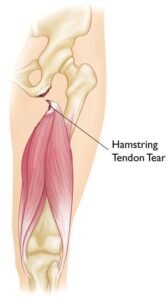
Prior to know about the hamstring strain injury, we should learn what exactly hamstring is and why is it important. Hamstrings also known as tendons are strong bands of tissue located right at the back of your thighs, linking the large thigh muscle to our bone.

Another definition of “hamstring” is: a group of 3 muscles located between the areas of hip to the knee at the backside of your thigh.  We do not tend to use these muscles a lot while we are standing or walking, rather they are used during activities such as running, jumping or climbing when we have to bend the knee.

What Causes Hamstring Strain Injuries?

A hamstring strain injury are usually caused when the hamstring muscles are excessively stretched.

They happen during abrupt, volatile movements, such as jumping, lunging or long running. However they can also occur in slow and gradual motions that tend to overstretch your muscles.

Recurring injury is common in athletes and sportsmen, as you’re more likely to injure your hamstring if you’ve injured it before.

Consistently doing your exercises like stretching and warm-up can drastically reduce the risk of hamstring strain injuries.

How do I know If I’ve A Hamstring Strain Injury

There are commonly there stages of hamstring strain injuries ranging from mild to partial and severe.  Mild hamstring strain injuries which is stage one, will usually starts pain abruptly and causes soreness at the back of the thigh. It can make moving your leg quite painful however the strength of the muscle is not much affected.

The second stage is referred to as partial hamstring strain injury. It is often more painful and tender. The symptoms might include bruising or swelling at the back of your thigh and it may also lead to lack of strength in the leg.

Severe hamstring strain injury which is stage three is critical as it leads to intense pain. In this case you won’t be able to use the affected leg at all.

The hamstring strain injury is one of the most common injuries accounting for 21% of GAA players, 12% of soccer players and 15% of Australian Rules players’ injuries.

There are two mechanisms of injury – stretch type and acceleration type injury – and depending on which one, can affect a different part of the hamstring. The further up the hamstring the pain is, the longer it will take to recover. 

The biggest risk factors are previous hamstring injury, decreased eccentric strength and fatigue levels. Other risk factors include age and playing position. For example, GAA players that play midfield or in the backs or are aged 18-20 or over 30, are at a higher risk of hamstring strains. 

Despite more and more being researched on the topic, the rate of hamstring injuries are increasing. Just take a look at the Premier League where the rate of injury has increased 4% annually since 2001. In the GAA hamstring strain injuries have increased two-fold over an 8 year period. Why is this? Some reasons may be due to the increased number of matches and training sessions and less recovery time.

Prevention in better than the cure so how do we best reduce the risk of these?

Some simple measures are to ensure you gradually and progressively increase the load across the hamstrings, ensure you are doing appropriate strengthening exercises so that they are “long and strong” and allowing enough recovery between sessions.

If you want an individualised approach to the management of your hamstring injury book in with us.


Warm Ups

Going back playing sports and worried about picking up an injury? Well there are a few things you can do and doing a proper warm up is one of them.

What makes a good warm up?

Does your warm up RAMP you up for your sport? If a warm up contains 4 of the following it is a good warm up:

  • Raise – Increase muscle temperature, core temperature, blood flow, muscle elasticity and neural activation.
  • Activate – Engage the muscles in preparation for the upcoming session
  • Mobilise – Focus on movement patterns which will be used during the game.
  • Potentiate – Gradually increasing the stress on the body in preparation for the upcoming competition/session.

Fortunately, the GAA have a number of evidenced based warm ups designed to reduce the risk of injury through these above principles:

GAA 15 Warm Up: https://learning.gaa.ie/sites/default/files/GAA-15-Warm-Up.pdf

Activate GAA Warm Up: https://ulster.gaa.ie/wp-content/uploads/2018/10/Long-guide-amended.pdf

The warm ups are based on solid medical research and, if performed regularly with proper technique, can reduce non-contact leg injuries by up to 50%.

If you are carrying a niggle and want to get it sorted, book in with us for an appointment.